Body Safe Sex Toys 2026: Silicone vs TPE Materials Guide
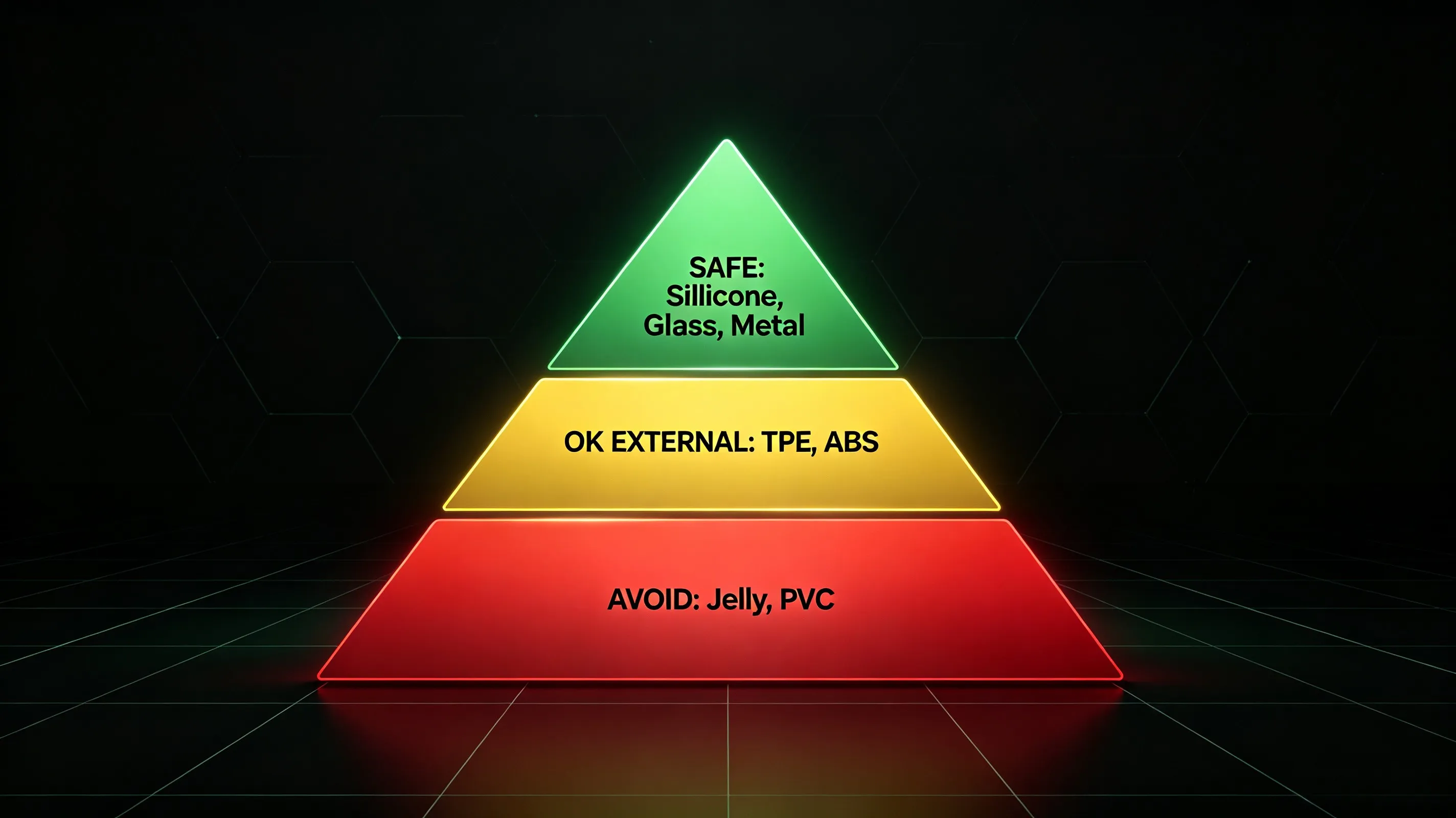
Use 100% platinum-cure silicone for insertable toys — it is non-porous, hypoallergenic, and can be boiled to sanitize. TPE is softer and cheaper but porous — replace every 6-12 months. Avoid jelly, PVC, and rubber — they contain phthalates linked to health risks. When in doubt, do the flame test: real silicone chars but never melts.
1. Silicone: The Gold Standard
Platinum-cure silicone is the safest material for insertable toys. Non-porous means bacteria cannot penetrate the surface — unlike TPE or jelly which absorb fluids over time. To verify real silicone: do the flame test. Hold a lighter to an inconspicuous spot for 2 seconds. Real silicone chars but does not melt or drip. Counterfeit "silicone blends" melt immediately. See our complete cleaning guide for silicone-specific sanitizing methods including boiling and dishwasher cycles.
2. TPE / TPR: Soft But Porous
TPE (thermoplastic elastomer) is softer than silicone and costs 60-80% less — which is why budget toys use it. The trade-off: TPE is porous. Bacteria, lubricant, and body fluids seep into the material over time. After 6-12 months of regular use, TPE toys should be replaced. Never boil TPE — hot water above 40°C deforms the material. Use only lukewarm water and dedicated toy cleaner. Apply renewal powder after drying to restore the silky feel. For doll owners, TPE maintenance is covered in our doll care guide. For a side-by-side of all three elastomers, see our silicone vs TPE vs TPR comparison.
3. Glass & Metal: Indestructible and Hygienic
Borosilicate glass (Pyrex) and medical-grade stainless steel are the most hygienic options available. Both are non-porous, hypoallergenic, and can be sterilized by boiling, dishwasher, or autoclave. Glass toys are heavier and retain temperature longer — put them in warm water before use. Stainless steel is lighter and more durable. The only risk: glass toys can chip if dropped. Inspect before every use. Run your finger along the surface — any roughness means retirement.
4. Jelly, PVC, and Rubber: Avoid These
These materials are banned in many countries for a reason. Jelly toys contain phthalates — chemicals linked to endocrine disruption and reproductive harm. PVC often includes lead as a stabilizer. Rubber (even "natural" rubber) contains latex proteins that cause allergic reactions in 6% of the population. If a toy smells like a new shower curtain or chemical factory, throw it out. A 2021 study found that 80% of jelly vibrators tested positive for phthalates above EU safety limits. More safety data from Planned Parenthood and WebMD.
5. How to Verify Materials Before Buying
Manufacturers lie about materials. "Medical grade silicone" on Amazon means nothing without certification. Trust these signals: brand reputation — Lovense, We-Vibe, and Lelo publish independent lab test results; price floor — real silicone insertable toys start around 0, anything below is likely a blend; retailer integrity — verified retailers like Vibrators.com carry only certified brands; community validation — Reddit r/SexToys has detailed material verification threads with flame test photos.
6. Lubricant Compatibility: What Destroys Your Toy
📺 Video: Materials Safety Explained
Materials safety demonstration: silicone vs TPE vs jelly — visual comparison.
The fastest way to ruin a silicone toy: silicone-based lubricant. Silicone lube bonds to silicone toys, creating permanent sticky patches and surface degradation. Always use water-based lubricant with silicone toys. For glass and metal, any lubricant is safe. For TPE, stick to water-based — oil-based lubes degrade the material faster. IntimateGuide recommends water-based lubricant for ALL toy types to eliminate compatibility risk. Check our doll accessories section for compatible cleaners and lubes.
7. Trusted Sources & Further Reading
- Planned Parenthood — Sex Toy Safety
- WebMD — Are Sex Toys Safe?
- r/SexToys — Material Verification Threads
🛒 Recommended Products
Find Your Perfect Match
Browse our detailed product reviews and comparisons.
Browse Toy Materials Products →Frequently Asked Questions
Is silicone always body-safe?
No — only 100% platinum-cure silicone. \"Silicone blends\" and \"medical grade\" labels without certification are marketing. Do the flame test: real silicone chars but does not melt. Fake silicone melts immediately.
How often should I replace TPE toys?
TPE toys have a 6-12 month lifespan with regular use. Signs to replace: darkening color, permanent stickiness that powder cannot fix, or any unusual smell. Store TPE separately — contact with other materials accelerates degradation.
Can silicone toys be boiled?
Yes — 100% platinum-cure silicone can be boiled for 5-10 minutes to sanitize. Remove batteries first. Never boil TPE, jelly, or motorized toys. After boiling, air dry on a clean lint-free towel.
What does a phthalate-free label actually mean?
Phthalate-free means the toy was manufactured without phthalate plasticizers. However, this label is self-regulated — there is no government body verifying phthalate-free claims. The safest approach: only buy silicone toys from brands that publish third-party lab test results, such as Lovense and We-Vibe.
Are glass toys safe?
Borosilicate glass (Pyrex) is extremely durable and safe. It is non-porous, hypoallergenic, and can be sterilized by boiling. The only risk: chipping from drops. Inspect before every use — any surface roughness means retirement. Regular soda-lime glass toys are less durable and should be avoided.